Viewing entries in
8b Miscellaneous

<span class="postTitle">The Great Tony Reddin: The Only Galway Man to Make the Team of the Century</span> A Cradle of Hurling; Stories from Southeast Galway by Aidan Lenehan

The Great Tony Reddin: The Only Galway Man to Make the Team of the Century

A Cradle of Hurling; Stories from Southeast Galway by Aidan Lenehan


To a young lad of 10 years of age in Nenagh Sportsfield on 22 August 1948, on a day that produced a semi-hurricane in the first half and a steady downpour in the second, Tony Reddin stood out like a colossus against the mighty men of Borrisileigh, dominated by Kennys and Ryans. They threw everything against him between the posts as he saved ball after ball, right, left and centre and, on one occasion, even with his head, and secured an historic victory for Lorrha in the North Tipperary Senior Hurling Final, with the greatest display of any man to appear in the club jersey.

After the game Monsignor Boland, a visitor from Duluth, U.S.A., and an old Toomevara hurler, was given the honour of presenting the cup to the Lorrha captain, Dan O’Meara, and, in the course of his remarks said: “He had seen many good hurling games in Ireland and the U.S.A. but the goalkeeping display given by the Lorrha goalie, Reddin, surpassed anything he had ever seen.”

What made Reddin so interesting in those early days, apart from his genius as a goalkeeper, was partly because he wasn’t a native of the county but an import to the parish from across the Shannon bridge from February of the previous year. In fact he had been enticed across from his native Mullagh by a fellow native, Joe Deely, who had been living in Lorrha for some time. Joe was aware that Tony, an excellent goalkeeper, was unhappy about his chances of making the Galway team, as his rival, Seanie Duggan, was firmly in possession of the position. Deely convinced him that Lorrha needed a goalkeeper and that his chances would be better across the Shannon.

Tony established himself quickly in the parish and was soon the goalkeeper in the 1947 senior championship, to which Lorrha had been promoted, as a result of winning the county intermediate championship of 1946. Initially it wasn’t all plain sailing for him. Tony performed well in the first two rounds against Borrisokane and Roscrea but was so poor in the semi-final against Borrisileigh that he was replaced by the former goalkeeper, Paddy ‘Red” Maher of Grange, before the end of the game. This lapse was soon to become a distant memory.

Tony helped Lorrha right through the 1948 championship and they qualified for the county final against Holycross-Ballycahill, who were also competing for their first senior county honours. The weight of expectation and a lack of experience combined with the performance of an excellent opposition resulted in a big defeat by 4-10 to 2-4 before a record crowd of 12,000 spectators at Nenagh. The defeat might have been greater but for the outstanding performance of Tony Reddin.


Galway Career

Some people are of the impression that Tony had no pre-1947 hurling existence. This is to miss a chapter of his life that is important. He had many hurling medals in his possession but one that he cherished, and had a special place for, was a county juvenile medal he won with Mullagh in 1933. It was the only county medal he won, and he was immensely proud of it. He played centre-field with the team. He won a divisional junior medal with Mullagh in the late thirties and found his place on the Galway junior team of 1940. They beat Roscommon in the Connacht final but went down narrowly to Cork by 3-3 to 3-1 in the All-Ireland at Limerick. In 1941 he was promoted to the senior ranks and played with Galway against Dublin at Roscrea. In the same year Tony made the Connacht Railway Cup team that was trounced by Munster.

An impressive if not spectacular record. For the next few years, he lost interest in the game and doesn't appear again until 1946 when he played full-forward with Galway in the Monagh¬an Cup game at London against Tipperary. Tony scored a point and Galway lost by a narrow margin. Later that year we find him listed as sub-goalie on the Galway team that went down to Cork in the All-Ireland semi-final at Birr.


His Name

The man who crossed the Shannon the following year has been variously known. Programmes and newspapers have called him Tony or Anthony and Reddan, Reddin and even Redden. Probably, the most common usage has been Tony Reddan. How did a man, who was christened Martin Charles Reddington end up with the name of Tony Reddan? Despite what his birth certificate states the family were always known as Reddins. Tony’s father, Mick, was never known as anything except Mick Reddin. Tony had a pet name, ‘Thaudy’, and when he came to Lorrha people thought it was ‘Tony’ and they began to call him by that name. As Tony himself says: “Nobody ever asked me what I was called: They just called me ‘Tony Reddan’ and the name stuck.” Tony was known by his birth certificate name on his first passport, received in 1950. He was Tony Reddin to everybody else. And this clarifies the second point: His name was Reddin, nothing else. It’s the name of his wife and children.


County Career

Tony Reddin’s exploits between the goals for Lorrha were bound to attract the attention of the county selectors. Tipperary hadn’t won an All-Ireland since 1945 and the fans were getting impatient. The man in possession of the goalie position was Jimmy Maher of Boherlahan.

In a fine nostalgic piece in the 1981 Tipperary G.A.A. Yearbook, Seamus Leahy recalls a visit from his uncle Paddy, who was the manager (at that time without the name) of the Tipperary team, and Jimmy Maher after Lorrha's defeat by Holycross in the 1948 county final. He produced an autograph book, and his uncle Paddy wrote: “Sensation: Holycross won county championship 1948. Tipp will win All-Ireland championship 1949. Signed: P. Leahy.” Then he handed the book to Jimmy Maher, who wrote: “Jim Maher, Boherlahan.”

“Identify yourself!” urged Paddy. “Jim Maher, Boherlahan could be anyone. Write ‘Tipp goalie’.” “Not after today,” said Jimmy, sadly but signing, just the same. “Didn't you see your man, Reddin, today? He's your goalie now.”

Jimmy was right. After eight years as Tipperary's senior goalkeeper he was to give way to this ‘unknown’ who had shown unusual ability during the North Championship. There hadn't been many players from that remote northern parish who had achieved county status, but Tony Reddin was to be the one and only outstanding Lorrha representative for the next nine years.


County Goalkeeper

Tony was picked for the first league game against Offaly at Birr on 24 October and had a fine game in goal when Tipperary won by 7-6 to 1-2. The next match was the 1948 league final, which should have been played the previous spring. Cork won by 3-3 to 1-2 despite the “splendid goalkeeping of Reddin.” Tipperary had three more league games before the final at Thurles on 27 February 1949 when they reversed the previous October verdict and defeated Cork by 3-5 to 3-2 on a day that Reddin saved brilliantly between the sticks. It was Tipperary's first major victory since 1945, and the team had scored 22 goals and 31 points and conceded 8 goals and 18 points in the series of games.


His Hurling Genius

Why was Reddin so brilliant that he was picked as Goalkeeper of the Century and later appeared on the Millennium team? Many people remember him as a big man going high for the ball, catching it securely and bursting out amid a welter of hurleys, to clear well up the field. It will come as a surprise to learn that Tony was not a big man. He stood 5’ 9” and, at the height of his career in the early fifties, and he never weighted more that eleven and a half stone! He was a very fit man. He trained for the position as keenly as another might train for centre-field. Running cross-country, jumping over hedges and ditches and building up his muscles made him the strong player he was. He had the eye of a hawk, some might say a compensatory quality for defects in his oral and aural senses. Neighbours have commented on how sharp that eyesight was in spotting someone at a distance. He was no mere ball-stopper but a player who completed the act by clearing the ball down the field. He was equally good on the right and left side, and this again came from constant practice. He sharpened his reflexes by belting a ball against a rough stone wall from short distances and catching it in his hand as it rebounded in different directions. Probably his greatest ability was a sensitive touch allied with the tilt of the hurley’s face at an angle which enabled him to kill even the fastest ball dead so that it rolled down the hurley into his hand as if by the genius of a master magician. Finally, Tony used no ‘half-door’ of a hurley to stop the ball. His was of ordinary size and he had the same stick for most of his hurling career, a heavy, many hooped, ugly-looking affair. He was a professional before his time and many of the skills he developed are in common usage today.


His Achievements

Tony Reddin's list of achievements is impressive by any standards. As well as winning three All-lrelands, six National Leagues, two Brendan Cup medals and one Oireachtas, he also won six Railway Cup medals and four ‘Ireland Team’ cups, the nearest thing to All-Star teams at the time. He travelled to London on nine occasions and played on the winning Monaghan Cup team on eight occasions. His ninth visit was as a substitute in 1957 when Tipperary were beaten. With Lorrha he won a second senior divisional title in 1956, before going down to Thurles Sarsfields in the county final.

During the course of his entire career with the county Tony played approximately one hundred major games and was on the winning side eighty-seven times. Whereas this success rate was a tribute to the standard of Tipperary hurling during the period, it was also in no small way due to the brilliance of the man between the posts.

Another interesting aspect of Tony's career in hurling was the regularity with which he turned out to play. From the first game he played with the county in October 1948 until he was dropped for the Monaghan Cup after the league defeat in May 1956, I can find only one match, a league game against Limerick at Kilmallock on February 6, 1955, when he didn't turn out. Having lost his place for the 1956 championship he showed a final flash of brilliance in the county championship of that summer. He was recalled for the league campaign and played three matches, the last of which was in February 1957. He won a league medal that year as a sub, when Tipperary defeated Kilkenny, and played his last game with the county when Tipperary travelled to New York the following October.

Reddin's last appearance with Lorrha was in 1958 when the team lost to Roscrea in the championship. One report on the game stated that “Tony Reddin showed he was by no means a has-been goalkeeper.” He played his first game for his adopted club on Easter Sunday 1947 against St. Vincent's. A month later he won his first tournament, for suit-lengths, at Portumna. It was a seven-a-side competition and Lorrha defeated Kilruane by nine points to one. Eugene O’Meara scored eight of the points and Tony got the other from a goal clearance. On the same day Reddin won the long puck competition with a drive of 106 yards. During his time with the Lorrha team he failed to turn out on only one occasion. That was in a tournament at Borrisokane in June 1951 against Ahane, who included Mick Mackey and Sean Herbert in their lineout that day. During his twelve years with Lorrha Reddin won North Championship medals in 1948 and 1956.

There is nobody to deny that he was one of the greats of hurling history. He was great in the days when a goalkeeper's fate was to be bundled into the back of the net if the backs let the forwards in. Tony's greatest asset was the ability to stop the ball dead so that it rolled down to his chest or his feet. He would leave the ball on the ground until the last moment and then, with the forwards rushing in, he would take it, sidestep them and have loads of space to clear. He claimed to know which side of the goal a ball would come by watching which foot a forward was on when he hit the ball. Whatever the reason for his greatness, his stopping prowess was the bane of forwards and a joy to supporters for many a year.

In my years of playing and following the game of hurling, no goalkeeper can compare with Tony Reddin. Ever since that wet and windy day in 1948 he has remained a hero, so reliable, so dependable, never equalled. I suppose the three All-Irelands he featured so strongly in, 1949, 1950 and 1951, left an indelible imprint on my experience. Having the privilege of playing in front of him in the North Senior Hurling Final against Borrisileigh in 1956 confirmed my feeling for the man, and I felt proud of the opportunity to share a hurling championship success with him before the end of his playing days.

Tony Reddin died in March 2015 in his 96th year and was buried in Bonoham Cemetery, in the parish of Lorrha. Mourned by his wife, Maura, and their nine children and families, only one gift was presented at the funeral mass for him in St. Rynagh's Church, Banagher on 4 March and that was the hurley stick he used when winning the 1949, 1950 and 1951 All-Irelands. It was a fitting and appropriate presentation as it was offering to his Maker the symbol of the gift which Tony had received at birth and which he developed, honed and perfected so well during his hurling career.
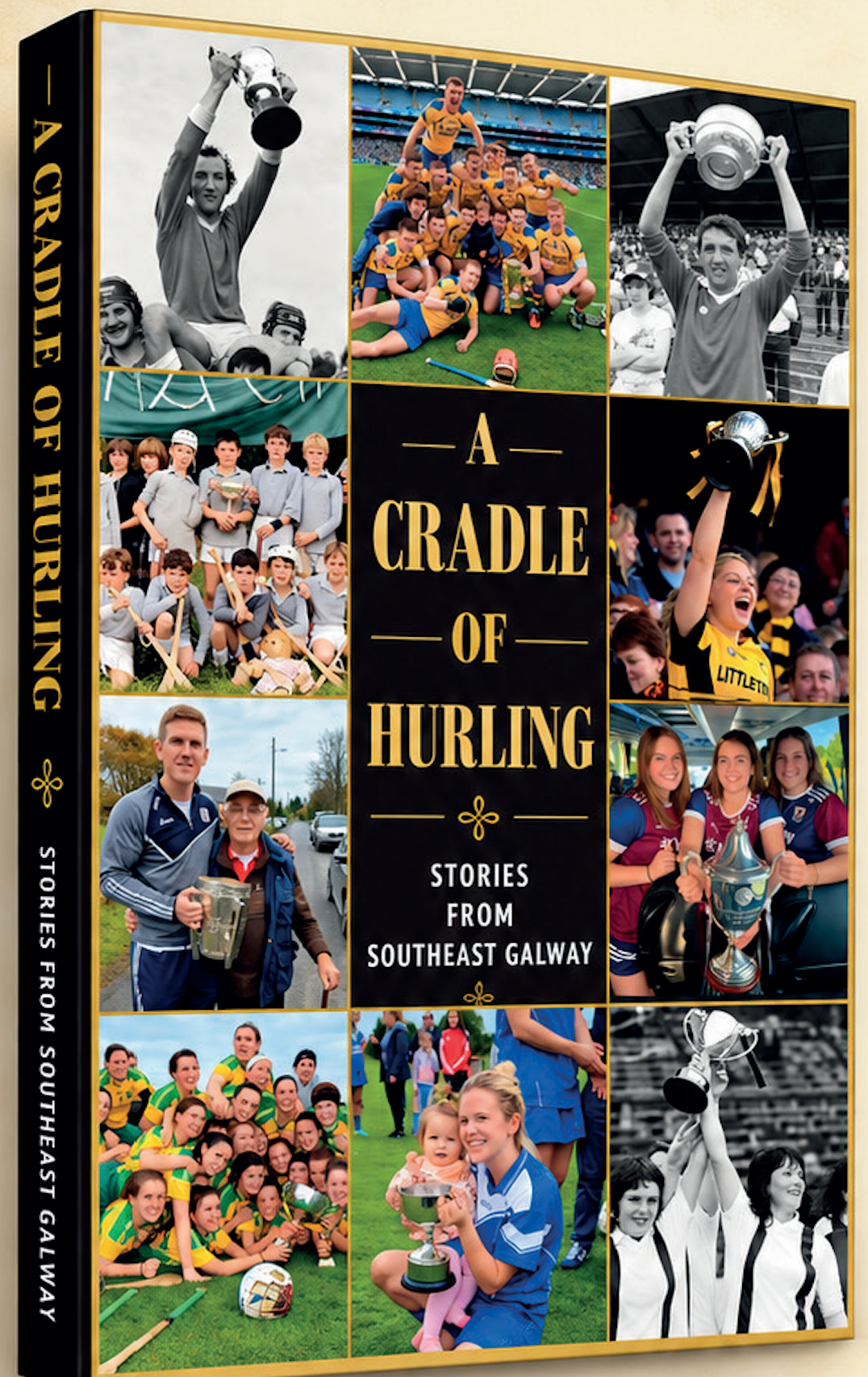

The book A Cradle of Hurling – Stories from Southeast Galway was officially launched on October 29, 2026 at Gullane’s Hotel in Ballinasloe, with the launch performed by GAA President Jarlath Burns.

About the Book & Launch
• Content: The book features 51 short stories written by 47 different local contributors, documenting over 150 years of hurling and camogie history, community life, and sporting memories across eight clubs in Southeast Galway from 1869 to 2026.
• Charity: All proceeds from the book sales go directly to Ballinasloe Social Services.
• Origin: The project began organically after a casual evening of storytelling among hurlers in Mother’s Bar, Kiltormer.

The Author / Editor
• Aidan Lenehan spearheaded and edited the collection (co-authoring alongside contributions from 46 other writers). Lenehan is a Galway author, hurler, and founder of the Wild Geese GAA club in Dublin, and has previously written works on local hurling heritage
<span class="postTitle">Memories of Galway v Kilkenny in the 1947 All-Ireland Semi-Final</span> A Cradle of Hurling; Stories from Southeast Galway by Aidan Lenehan

Memories of Galway v Kilkenny in the 1947 All-Ireland Semi-Final

A Cradle of Hurling; Stories from Southeast Galway by Aidan Lenehan


“Mind the child!” roared the voice, “Mind the child!”, it repeated. The scene was the exit gate of St. Brendan’s Park, Birr after the All-Ireland Senior Hurling Championship semi-final between Galway and Kilkenny on 27 July 1947.

I was the child, a mere eight year-old, bordering on nine, in a crush of men, including my father, seeking to exit the field after a thrilling game that saw Kilkenny swipe victory from Galway in the last minute. I don’t remember any fear for my safety just excitement and a feeling of importance at being in the midst of so many on such an exciting occasion.

Later, the newspapers told us that 23,250 fans had paid £2,021 8s 3d to see the match. I don’t know what the seating capacity of the venue was, but I recall we were on the sideline. We must have arrived early, because the sideline was closed long before the first match, the minor semi-final between Galway and Dublin. I had a perfect view, lying on the grass close to the play for the duration of the game.


Some Details

I don’t remember many of the details of the match. The parade beforehand stands out. It included two bands, the Birr St. Brendan’s Pipe Band and the Nenagh Brass Band. I expect we were shouting for Galway as we lived beside the River Shannon, and my mother did most of her shopping in Portumna. The names of some of the Galway players stood out. Seanie Duggan was the outstanding goalie in the country at the time and his dominance in the position led to Mullagh’s Tony Reddin, another goalkeeper, leaving the county and crossing the Shannon to Lorrha earlier in the year for a stellar career with Tipperary. Josie Gallagher was another familiar name. Others to stand out were John Killeen and Hubert Gordon, as well as Fr. Paddy Gantley, who played under the name, P. Gardiner! The Kilkenny names were less familiar but those that registered included Sim (Simon Francis) Walton, Jim Langton, Paddy Grace and Terry Leahy.

Galway were hopeful of victory on the day. They had lost badly at this stage in Birr the previous year, when they were walloped by Cork, 2-10 to 0-3. But a better memory was of their display at the same stage in 1945, when they held Kilkenny to a point, 5-3 to 2-11, at the same venue. What really built up expectations in the Galway camp coming up to this semi-final was their great displays in the Railway Cup games earlier in the year. Connacht, which was all Galway, defeated Leinster in the semi-final by 2-6 to 2-5, and Munster by 2-5 to 1-1 in the final.

One succinct account of the game from a Galway point of view was that given in the report of the match in The Connacht Tribune: “Although they spent half an hour proving that they were at least as good as Kilkenny and most of the remainder of the hour proving that they were beyond doubt the better side, the Galway senior hurling selection made Kilkenny a present of the right to enter the All-Ireland final. It was a present that was served out on different platters. There was a defensive slip within two minutes of the start that let Kilkenny through for a goal; there was a weakness in one of the Galway back positions and two forward berths and there were three or four points thrown away by Galway. Apart from these things it was a game of hard, fast and at time brilliant hurling; it was a game of thrills climaxed by a great shock for Galway and a lucky win for Kilkenny.”


A Close Encounter

The game was a tight contest in which Galway were slightly ahead by a point, 1-5 to 1-4 at half-time. Their performance improved in the second half, and they were ahead at the end of normal time by a point. At this point, when the whistle was blown for a free, the Galway supporters rushed on to the field to embrace their heroes, believing it was the final whistle, only to learn the whistle was for a free to Kilkenny. This was a shock for the supporters who were ordered back to their seats and the free resulted in the equaliser for Kilkenny. Galway were off balance then and in the closing minute Kilkenny added to their tally, when Jim Langton sent over for the winning score by 2-9 to 1-11. It was an excruciating ending for Galway supporters.

The Galway lineout was as follows: S. Duggan (capt), Jas. Killeen, P. Forde, W. Fahy, M. J. Flaherty, J. Brophy, B. Power, P. Killeen, John Killeen, T. Kelly, H. Gordon, P. Gordon, J. Gallagher, S.. Gallagher, M. Nestor. Subs: D. Flynn, J. Coen, B. Hanniffy, M. Glynn, S. McNamee, P. McNeill, P. Tully, J. Jordan, T. Callanan.

Kilkenny: J. Donegan, P. Grace, P. Hayden, W. Walsh, J. Kelly, J. Prendergast, M. Marnell, D. Kennedy, J. Heffernan, J. Langton, T. Leahy, S. Downey, T. Walton, P. O’Brien, L. Reidy. Subs: P. Lennon, L. Kelly, P. Fleming, J. Egan, W. Dunne, M. Neary, J. Mulcahy.

Both teams had complaints about the referee. The man who was in control of the game was Dinny Costello of the Shannon Rovers Club in North Tipperary. He was a major figure in his club, having held most positions including that of chairman. He was also a referee, and it is believed that Seamus Gardiner, who had been President of the G.A.A. from 1943-46, was instrumental in his appointment. Gardiner, who was from Borrisokane, would have known Costello well and, with the match in Birr, he would not have been a surprise choice. It is also significant that Gardiner and Costello were elected as North Board representatives to Congress at the 1948 divisional board convention.

The Galway supporters believed the referee had allowed too much added time and it was during that additional period that Kilkenny got the scores that gave them victory. They vented their fury on him after the game, heaping abuse on him as he left the field. He had to be protected by the Gardai. (There is a belief in Shannon Rovers that some Galway supporters called to Costello during the week following the match to apologize for their behaviour!)


Unsportsmanlike Conduct

But Kilkenny weren’t happy with the referee either. At a meeting of the Kilkenny Corporation the week after the match, strong protests against what was described as the unsportsmanlike conduct of the Galway team were expressed when a resolution congratulating Kilkenny was passed. One speaker, Mr. J. Magennis, said there were certain players on the Galway team who, he was sorry to say, were not a credit to the Association. Another speaker, Mr. J. P. Pattison stated that: “Some things happened at Birr, which called for very definite action, and those found guilty of participation in those acts, should be debarred from taking part in future games.”

These aspersions on the Galway players weren’t well received at the next meeting of the Galway G.A.A. Board. The chairman had this to say. He had hoped that the Kilkenny G.A.A. Board would have rejected the allegations, but they had not. He added: “I think that if the Kilkenny Corporation paid more attention to housing than to matters concerning the G.A.A., they would be much better serving the interest of the ratepayers.”

In the course of the discussion the referee came in for criticism. Mr P. Naughton, chairman of the North Board was critical of the referee. He stated, “that if they had had a proper referee they would have ‘walked the match.’” He wanted to know who asked for this particular referee.

At this stage the secretary, Mr. S. Ó Faolain, said that the referee wasn’t asked for. Willie O’Donnell was the referee requested and the one appointed was only the second choice.

The discussion went on to other matters. Galway might have objected to Kilkenny’s victory as they hadn’t submitted their list of players to the referee until after the game. He also revealed that Nenagh might have been the venue for the game.

An interesting letter appeared in the Kilkenny People on 16 August in response to the allegations of dirty play by Galway: “Sir: I read a lot in your paper about the Kilkenny Corporation’s description of hooliganism on the part of Galway in the Birr match, but I attended a match at Nowlan Park last Sunday between two Kilkenny teams and there was stuff served up there both between players and spectators that left Birr in the shade.” The letter was signed: A Man from the West.


Conclusion

So, was the game as bad as it was painted by Kilkenny? I am unable to give an opinion. The following was that of a neutral observer: “The game was unduly rough at times: several players had head injuries, which was a sign that the rules weren’t strictly observed.”

What was memorable about the occasion, apart from the match, was what it meant for the people of Birr. The organizing committee, under the leadership of Sean Robbins, were untiring in their efforts and did ceaseless work to make St. Brendan’s Park a “veritable billiard table of grass and soil” for the match. At the time the venue had the name of being the best sod for hurling in the country, ahead of Semple Stadium. The organizers had one hundred stewards on duty and hoped that prices for parking and food would not be as gouging as had been experienced at the Munster final at Thurles the previous year.

The atmosphere of the occasion is somewhat captured by this colour piece in the Midland Tribune the following week: “With my sideline ticket firm in the heel of my fist, I crossed to the nearest hawker’s stand and stood boggling at the mounds of foreign confection – chocolate from Denmark and Czechoslovakia, oranges from Brazil, bananas from the Canaries, with matches from Italy and cigarettes from England. A surge of unreasonable patriotism welled up in me: ‘Any Urney?’ I ventured. It was like an unexpected jab in the solar-plexus to the ample be-shawled lady behind the mounds, who shook herself and gasped: ‘Lor, no, dearie. You’d have to go to Prague for that.’”

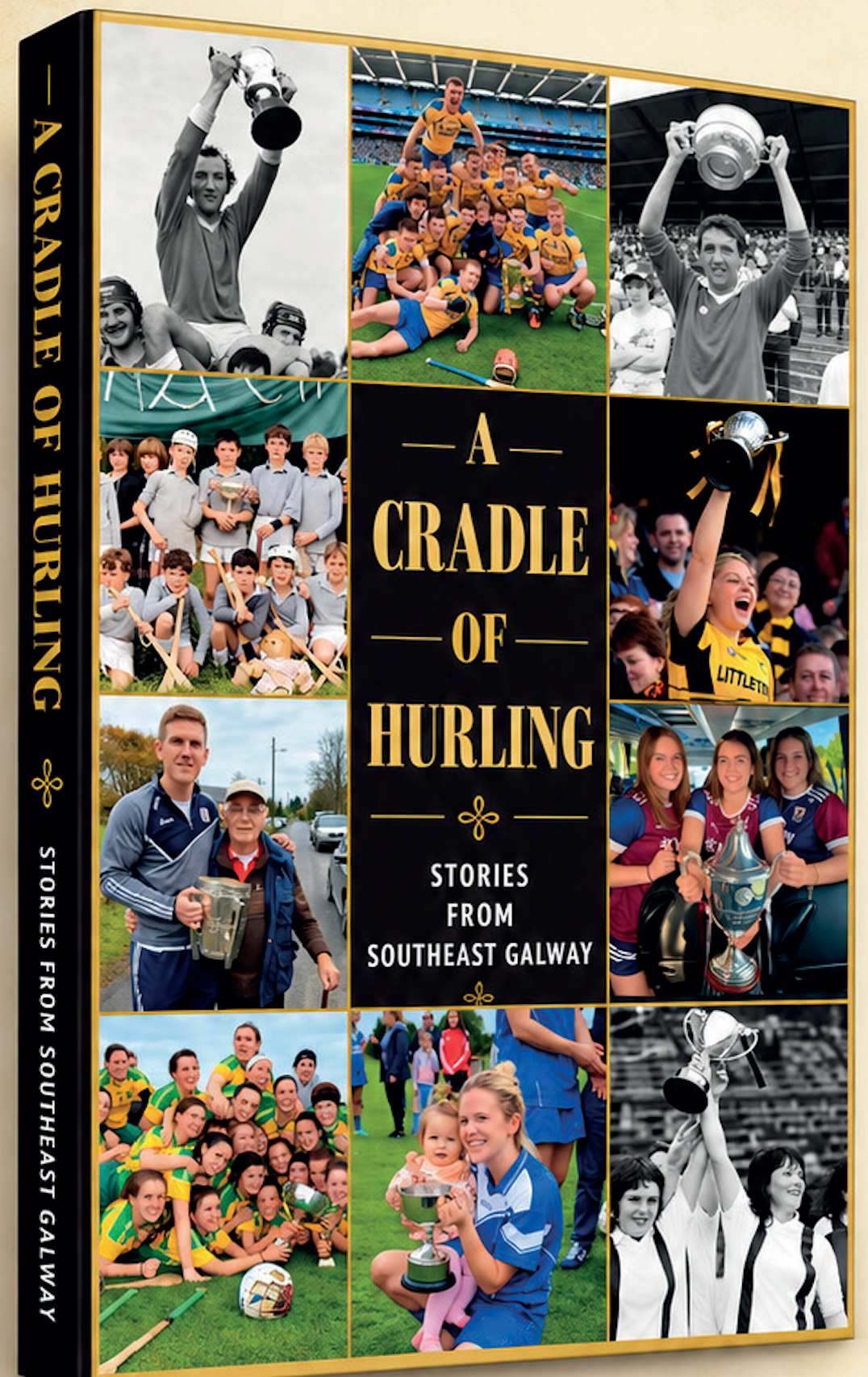
The book A Cradle of Hurling – Stories from Southeast Galway was officially launched on October 29, 2026 at Gullane’s Hotel in Ballinasloe, with the launch performed by GAA President Jarlath Burns.

About the Book & Launch
• Content: The book features 51 short stories written by 47 different local contributors, documenting over 150 years of hurling and camogie history, community life, and sporting memories across eight clubs in Southeast Galway from 1869 to 2026.
• Charity: All proceeds from the book sales go directly to Ballinasloe Social Services.
• Origin: The project began organically after a casual evening of storytelling among hurlers in Mother’s Bar, Kiltormer.

The Author / Editor
• Aidan Lenehan spearheaded and edited the collection (co-authoring alongside contributions from 46 other writers). Lenehan is a Galway author, hurler, and founder of the Wild Geese GAA club in Dublin, and has previously written works on local hurling heritage

<span class="postTitle">Jim of the Mill’s</span> Tipperary Tales, Profiles of Notable People, 2026

Jim of the Mill’s

Tipperary Tales, Profiles of Notable People, 2026

One of the fascinating tales of Tipperary is the story of Jim of the Mills, which stretches back into the nineteenth century. Early in the eighteen hundreds the original Jim of the Mill built a mill in Ballyboy, Upperchurch. In 1830 he added a pub and it became the centre of life for the people in the area, catering for most of their needs.

The mill was powered by the Owenbeg river, which flowed by on its way to the Clodagh and eventually into the Suir. The mill provided a great service to the local farmers grinding their corn, but was also a meeting place for neighbours to swap the latest information from the district at a time when mills and pubs were the main sources of information.

Jim of the Mills became a stopping point for many people from outside the area over the course of time. The Limerick senior hurling team that played at Thurles in the first half of the twentieth century were occasional visitors. Tyler Mackey was a regular on his way home to Ahane. Later the great Limerick team of the thirties made many a call. In fact Mick Mackey called there after his last match and left his hurley after him. Do they still have it? Alas, no! Jim believes it may have been used for driving cattle and its significance forgotten! The Rackards called there a few times with their friend, Paddy Mockler, from Thurles. And the man from Dallas, Patrick Duffy, along with many famous names, were later visitors.


Inherited the Pub

During the course of the twentieth century the place declined in importance when the mill closed down and the pub also. Fast forward to the eighties and the current Jim of the Mill, who was born and reared in Seskin, Thurles inherited the place and brought it back to life. Jim, who was born in 1951, farmed and played hurling as a notable full-back on the Sarsfields team, winning a county final in 1974. He was also a keen tug-of-war contestant and was part of a team that won a Munster championship..

He re-opened the pub in the early eighties on a part-time basis, bringing cases of beer and other requisites in the boot of his car and opening two nights a week, on Fridays and Saturdays. Jim O’ the Mills soon became a popular venue again and was generous in its opening hours, especially at night! This development attracted the rigours of the law and Jim had a number of days in court and some hefty fines.

The reason for the limited opening hours was due to the fact that Jim was still living in Seskin, where he did his daily work on the farm before going out to Ballyboy in the evenings. He eventually went to live there in 1990, ultimately changing the pub opening to Thursday nights and reducing it to one a week. This makes it probably unique in Ireland as a pub with one opening in the week and being listed as one of the 10 best pubs in Ireland!

Marriage

Jim’s permanent move from Seskin came about with his marriage to Kae Clancy in 1990. In the course of time the couple reared five outstandingly talented girls, Róisín, Áine, Greta, Cáit and Erin. Renovations to the house were carried out and conversion of the old mill section into a habitable state. This section with its powerful beams has now been changed to a living-room. The mill wheel is gone and there is no sign of the mill works as the Owenbeg continues to flow by. On a summer’s evening in the lawn beside the house it is an idyllic place to be even though the main attraction is the entertainment in the pub on one evening a week .

What makes Jim of the Mills such an attractive venue for people!? It is not a large place as crowds move around to find a place to sit or to stand, According to Jim it’s a location where people get an opportunity to sing, a place to renew friendships, a venue where the clientele from a wide area get an opportunity to hear new songs. Jim himself revels in a range of favourites which include John McCormack, The Boys of Bar na Sráide, Boulavogue and a wide range of Tipperary songs.

A Session

Sean Laffey of the Irish Music Magazine, has described a normal session: ‘Most nights you will be treated to a grand feed of unusual songs and long ballads, with short interludes of traditional music thrown in to break up the flow and give you enough time for a refill at the bar. On the night in question, there were more musicians than normal, many of whom were very young, school was out for the summer and the kids were out playing. The repertoire consisted of a great deal of Kerry influenced sets and polkas, with a local accent. This may be a reflection on the age of the players or perhaps it goes back to a time when this part of the county supplied itinerant spailpín labourers to the rich farmers of Kerry and Limerick.

‘Songs were very local, many in Irish, with Stephen Foster’s Hard Times being the best known of the more commercial ones that were sung on the night. Around half-past midnight a large family rolled in from Tyrone. This brought out a series of rebel nationalistic songs from the locals, many of whom had Tyrconnell versions to entertain the visitors with.

‘The musical highlight of my evening was when the eponymous Jim O the Mill, took out his fiddle and sang a wonderful swinging version of the Percy French song. The Darling Girl from Clare. Then it was ham sandwiches all round, more pints and a few songs. We left early, my Mr Ryan had a barn of cows to milk, and as we pulled away for the direction of Dundrum the sun was just beginning to rise. Jim O' The Mills will take some finding and you'll need a herd of excuses to get out of the place before dawn.’

Popular Venue

Jim of the Mill’s has been included in the ten most popular pubs in Ireland. One has to ask why a pub in a remote area, that hasn’t been renovated for years and with little comfortable accommodation for the many who come there on the one night of the week that it opens should be such a popular venue?

Probably its greatest attraction is the proprietor, Jim Ryan, himself and an outstanding character in his own right. A most unprepossessing individual with a rakish look and the cap pitched sideways on his unruly locks, he is transformed into an amazing entertainer, when he bursts into song and accompanies himself on a musical instrument. He is also a noted story-teller and enjoys the general craic. Then there is the venue, which is more in tune with what pubs were like in the ‘forties and ‘fifties. The atmosphere of these times has been retained with the flag floor and the open fire.

This is the unusual setting that attracts people from far and near who come there to listen or to sing and the large numbers of people bring with them a great variety of songs and tunes that constantly refreshes the entertainment.

Also, the crowd that attends is renewed as people learn of this unique place and put it on their bucket list to visit. At present it has become an attraction for younger people who find it as attractive as the older generation in the past. This may be due to the activities of Jim’s daughters who have used their many talents to add to the story of this unique place.

<span class="postTitle">Charles Bianconi and Boherlahan</span> Tipperary Historical Journal 2026

Charles Bianconi and Boherlahan

Tipperary Historical Journal 2026


It is striking that Charles Bianconi chose Boherlahan—the wide road—as his final resting place. Surely it was a fitting place for the man often described as the “father of the Irish transport system,” or, more poetically, for a man who began his Irish career as a pedlar of devotional prints, to leave his last remains1. Recently, Boherlahan has marked anew its association with Joachim Carlo Giuseppe Bianconi, born near Lake Como on 24 September 1786.2 Although these commemorations did not receive the same publicity as the re-enactment of the first Bianconi coach service between Clonmel and Cahir, held on 2 October, 1986, the parish’s connection with Bianconi is nonetheless a strong one. Within it stand two impressive and enduring monuments to this extraordinary Italian: Longfield House and the mortuary chapel constructed by Bianconi for himself and his family.3

Longfield

In March 1846, Bianconi purchased Longfield House from Captain Richard Long together with 623 Irish acres for £21,000.4 That a former pedlar of holy pictures could amass the means to buy such an estate is remarkable in itself. Bianconi had arrived in Ireland in 1802 to apprentice with Andrea Faroni, another Italian immigrant who traded in religious prints in Dublin.5 Upon completing his apprenticeship, he invested his modest savings in a stock of pictures and frames and set out on the roads of Ireland to sell them.6 For several years he trudged the highways and byways, prospering gradually in his laborious trade. In time he established shops in Carrick-on-Suir, Waterford and Clonmel.7


Transport Pioneer

Through these travels, Bianconi came to recognise the need for an affordable and reliable passenger transport system in Ireland.8 His opportunity arose after the end of the Napoleonic Wars, when large numbers of horses came onto the market.9 Purchasing some of these animals, he inaugurated his first scheduled car service between Clonmel and Cahir in July 1815.10 The enterprise flourished from the outset, ultimately making him a wealthy businessman whose success was recognised in civic life when he was elected Mayor of Clonmel.11

Bianconi took up residence at Longfield on 16 September 1846—his sixtieth birthday—and was warmly welcomed by the local people. Bonfires blazed along the roads near the estate, and a triumphal arch was erected across the avenue gates. The grounds were thronged with tenants and labourers. A band travelled from Cashel and a dance was held that evening.12In his speech of thanks, Bianconi declared the now-famous maxim that “property has its duties as well as its rights.”13 Every class in society, he maintained, possessed rights: landlord, mechanic, and labourer alike. Even the poor man earning a shilling a day had as strong a claim to the enjoyment of his home “as the queen on her throne.”14 Whenever the people required assistance within his power to grant, he assured them he would willingly provide it. He credited much of Ireland’s recent social improvement to temperance and public virtue, owing largely to the work of Fr. Theobald Mathew and the leadership of Daniel O’Connell.15


A Friend in Need

During the Great Famine, Bianconi proved an important friend to the local community. He provided loans and assisted some in emigrating when they could no longer sustain themselves.16 In 1848 he established an extensive programme of drainage works on his estates. At a time when labourers might earn only eight pence per day, the drainage workers, paid by the piece, could earn up to nine shillings per week.17 Over one hundred men were employed there for a considerable period, and no one on his estate is recorded to have died of hunger.18 When potatoes sold at eight to ten pence per stone in the market, he sold them locally for four pence. 19


Unpopular with the Gentry

Such benevolence toward the landless poor did not always endear Bianconi to his neighbours among the landed gentry. Some disliked seeing a self-made man setting an example they were reluctant to follow.20 Yet Bianconi, independent in character, largely ignored their coldness and, in time, achieved a position of significant respect.21

The Mortuary Chapel

Soon after settling at Longfield, Bianconi determined to construct a mortuary chapel on the estate as a family burial place. Built of limestone and sandstone at a cost of around £1,000, it was designed largely by Bianconi himself and erected with the assistance of local craftsmen.22 The building features a flat-roofed tower surmounted by a Gothic belfry. The Archbishop of Cashel, the Most Rev. Dr. Leahy, presided at its consecration.23 The first interment there was that of his daughter Kathleen Henrietta, whose remains were brought back from Italy.24 Buried alongside her are other members of the family including his daughters Charlotte and Mary Anne O’Connell, his wife Eliza, his grandson John Coppinger O’Connell-Bianconi, his great-granddaughter Mollie Watson, and Bianconi himself.25

His Estates and Farming

During his years at Longfield, Bianconi greatly expanded his holdings with purchases in Ballygriffin, Road, Glanagile, Cashel, Ballinard, Knockamore, Liss, Lower Pallas and Upper Pallas.26 These outlays amounted to roughly £48,000, bringing the total value of his property to over £70,000 and the total area to nearly 5,000 Irish acres.27 He pursued agricultural improvement energetically. He often tended to the ailments of his own horses and kept a considerable number of livestock on the estate. He bred sheep and Berkshire pigs on a large scale and even experimented with ploughing by horned cattle in recollection, perhaps, of practices in his native Lombardy. The experiment was eventually abandoned as inefficient.28

A firm believer in heavy manuring, he adopted the maxim “the manure is the farmer,” and once took a particular interest in spreading soot upon his pastures.29 He invested nearly all of his fortune in land, subscribing to the proverb: “Money melts, land holds, while grass grows and water runs.”30

Final Years and Death

Charles Bianconi died at Longfield at 4:45 a.m. on Wednesday, 22 September 1875, two days before his ninetieth birthday.31 According to his great-granddaughter and biographer, Mollie Watson, the household gathered around his bedside throughout the night. Suddenly, the sound of galloping horses was heard on the gravel outside. The grooms rushed to the stables, but found the gates secure and the horses inside. Still the clatter continued—swelling and fading like an ebbing tide—“just as though all the horses in Bianconi’s long life had come to be with him at the last.”32 A romantic image, perhaps. But not unworthy of a man who quite literally set Ireland on the road.

References

1 O’Connell, Charles Bianconi, 1–3; McElroy & Butterfield, Charles Bianconi (DIB online)
2 Watson, King of the Irish Roads, 3–6.
3 Espinasse, Bianconi, 112–115.
4 O’Connell, Charles Bianconi, 147–151.
5 O’Connell, 14–18.
6 Smiles, Men of Invention and Industry, 257–260.
7 Espinasse, 48–55.
8 O’Connell, 35–42.
9 Espinasse, 60–63.
10 Levey, “Charles Bianconi,” History Ireland 20, no. 1 (2012).
11 O’Connell, 136–139.
12 Espinasse, 120–123.
13 Espinasse, 120–123.
14 Espinasse, 120–123.
15 O’Connell, 131–135.
16 Watson, 122–126.
17 O’Connell, 160–162.
18 Espinasse, 133–139.
19 Espinasse, 133–139.
20 Espinasse, 142–145.
21 Espinasse, 142–145.
22 O’Connell, 174–177.
23 National Inventory of Architectural Heritage, “Bianconi Mortuary Chapel.”
24 O’Connell, 176–177.
25 Cahir Historical Society, Bianconi 200.
26 Watson, 135–138.
27 Watson, 135–138.
28 O’Connell, 178–183.
29 O’Connell, 178–183.
30 O’Connell, 178–183.
31 Watson, 189–191.
32 Watson, 190–191

<span class="postTitle">Seamus J King talking about Tony Reddin</span> Redwood Castle, June 2025

<span class="postTitle">Oration at the Interment of Michael O'Dwyer</span> Ardmayle Cemetery, June 7th, 2025

Oration at the Interment of Michael O’Dwyer

Ardmayle Cemetery, June 7, 2025

Since hearing of Michael’s death on Thursday one image keeps flashing in my mind. It is of a group of people outside Granny’s kitchen on a beautiful Sunday morning in 2002. In the centre of the picture is the imposing figure of G.A.A. President, Joe McDonagh, who was on a brief visit to Cashel and the most appropriate place to meet him was in the shadow of the Rock and where we could enjoy the hospitality of the O’Dwyer family.

The G.A.A. President’s visit was brief but it was a recognition of the achievements of the club and its contribution to the G.A.A. in general. Of course I have to add it had something to do with the fact that a Galway man, was secretary of the Cashel King Cormacs!

In contrast, today we are witnessing a more sombre picture, the interment of a past chairman of the club, Michael O’Dwyer. But I believe there is a connection. During the years of Michaels’ chairmanship, 1980-1984, the improvement in the club’s achievements that came to fruition in the early nineties, can be seen.

Michael got involved with the club in the late sixties, when his son Liam was part of that outstanding under-13 side that qualified for the county final in hurling and football, winning the latter but beaten by Ballina in the hurling. That side formed the basis of the outstanding success through most of the 1970s

Following his involvement with the juveniles in coaching and selectorial roles, Michael was elected to the senior committee in the late seventies and became chairman of the club in 1980, succeeding Jim Sullivan. His first year as chairman was a hectic one. It marked the 50th anniversary of the establishment of the West Board, which was celebrated in an appropriate manner. It included a visit of GAA President, Paddy McFlynn to Cashel and a presentation to him by Michael. More importantly the King Cormacs defeated Sean Treacy’s in a replayed West final. An even greater achievement was the winning of the county minor championship, beating Thurles Sarsfields convincingly in the final, and to add cream to the achievement, the under-16 hurlers also won the county championship beating Toomevara in the final.

During these early years of the 1980s the hurlers in the CBS were flying under the baton of the aforesaid Galway man, and won two All-Ireland B College hurling titles. Training facilities were very important for the preparation of the team. This was the time when Cashel King Cormacs weren’t in control of Leahy Park but Matty is very appreciative of the efforts that Michael made in these years to ensure that the CBS had the facilities of the park for training.

It isn’t possible to recount all the achievements of the late Michael O’Dywer, but two stand out with distinction. The first of these was the introduction of a club constitution in connection with Martin Quirke. This was a major innovation as it was the first time Cashel King Cormac’s club had a system of rules and basic principles by which the club is run. Its existence safe guards the members as well as the existence of the club.

The second of these was the refurbishment of Leahy Park for the hosting of the 1983 county senior hurling final between Borrisleigh and Loughmore Castleiney. It was prevented from taking place in Thurles because of the refurbishment of the stadium for the 1984 All-Ireland final. It was a brave decision to host the final as the facilities in Leahy Park were primitive by today’s standards at the time. But, everything went off without a hitch.

Michael O’Dwyer’s contribution to the Cashel King Cormacs and to the G.A.A. in general was recognised when he was honoured with a Laochra Ghael Award in 2009. In the citation, following the listing of some of his achievements, it stated: ‘Michael had the capacity to surround himself with a good team of clubmen whom he knew would move forward any project to a successful conclusion. On the social side of things he was instrumental in organising some of the most successful club socials during the 1980s and in leading club tours to London. During his time as chairman, the King Cormacs were trend setters in producing a club history. Stepping down as chairman at the club AGM in Centenary year, Michael was described as a moderate and calm club chairman.’

In conclusion I want to extend the sympathy of the Cashel King Cormacs to the O’Dwyer family and express the club’s thanks for Michael’s contribution during a long lifetime.

<span class="postTitle">Thomas Glendon is the Designer of the Knocknagow Award</span> Presentation Booklet for the Annerville Awards at Clonmel on January 25, 2025

Thomas Glendon is the Designer of the Knocknagow Award

Presentation Booklet for the Annerville Awards at Clonmel on January 25, 2025

Thomas Glendon has been designing the Knocknagow Award for 45 years. He recalls being contacted by Maurice Durney from Showerings, Clonmel in 1979. The contact stemmed from a recommendation by Apple Advertising, who were looking for an artist to explore and produce ideas for a series of sports awards.

Johnny O'Loughlin is the longest-serving member of the United Sports Panel. He joined the panel in 1976 and recalls that there was no specifically-designed Knocknagow Award before 1979. The panel usually contacted a provider to supply trophies for the recipients, with a bigger one provided for the Knocknagow Award. There was a lack of consistency in the design and quality

Johnny O'Loughlin is the longest-serving member of the United Sports Panel. He joined the panel in 1976 and recalls that there was no specifically-designed Knocknagow Award before 1979. The panel usually contacted a provider to supply trophies for the recipients, with a bigger one provided for the Knocknagow Award. There was a lack of consistency in the design and quality of the trophies.

Thomas Glendon's brief was to design a major award, Knocknagow, for a Tipperary sports star of the past; and a secondary award, named the Cidona Awards, for established and emerging athletes. There was no restriction on the field of sport and over the years a broad range of activities, including Gaelic football, hurling, soccer, rugby, boxing, athletics and showjumping were to receive recognition.

Considering the brand and products produced by Showerings, a motif based on an apple appeared the most appropriate design for the Knocknagow award. At an early meeting at the design stage an apple in marble was suggested, but when a request emerged for it to be sprayed silver, the idea was dropped. Thomas Glendon explains his intention: “In my modelling of the award I felt an apple in the round would be too much in volume. This led to the process of paring and decoring to arrive at a satisfactory shape. To an untrained artistic eye it had to immediately convey its source of firm, distinctly apple and not easily mistaken for another fruit. The success was in the outline, it conveyed an apple without all the weightiness.

“The award is made of bronze, cast in a sand mould, polished and patinaed. In the raw the metal is cased and filed to define the outline, then the edges are patinaed and the face given a high polish. Elevated on a bronze dowel, it is set on a polished base made of Kilkenny limestone”.

The original Cidona Awards, now ceased, were medallions of sterling silver, echoing the Knockagow in outline.

Thomas Glendon hails from a line of long established monumental masons in the Dun Laoghaire district, who originally came from the Inistioge area of Kilkenny in the 1880s.

His introduction to craftsmanship in stone was in his father Laurence's workshop at Deansgrange, County Dublin. Under his guidance he learned the primary techniques in stonework, geometry, lettering and toolmaking. Sometime later he was introduced to the well-known letter-cutter and sculptor, Michael Biggs.

The 1916 Proclamation carved on Ardbraccan Limestone at Arbour Hill is his masterpiece in lettering. He also had a very successful and influential body of work in Sanctuary Furniture design; St. Michael's Church, Dun Laoghaire and St. McCartan's Cathedral in Monaghan are well-known examples of his approach to sacred elements.

Thomas was Michael Biggs' assistant for six years, from 1968-1974, when he received an excellent grounding in the fundamentals of letter design and model-making.

They parted on good terms and Thomas set up his own studio in Shannon, County Clare, learning the rudiments of the self-employed.

In fact, while in Shannon the request to design the Knocknagow award came about.

He has fond memories of travelling through the Glen of Aherlow to meetings in Clonmel.

<span class="postTitle">Bulmers' Connection with Tipperary United Sports Panel Goes Back 60 Years</span> Presentation Booklet for the Annerville Awards at Clonmel on January 25, 2025

Bulmers' Connection with Tipperary United Sports Panel Goes Back 60 Years

Presentation Booklet for the Annerville Awards at Clonmel on January 25, 2025

This year we celebrate the 60th anniversary of the sponsorship of the Tipperary United Sports Panel Awards by Bulmers.

In connection with the presentation of the 1964 awards in the Ormonde Hotel, Clonmel on January 31, 1965, a large advertisement appeared in The Nationalist newspaper announcing the sponsorship: 'The Irish Cider & Perry Company Ltd salute the Tipperary Sports Stars of 1964 and are pleased to sponsor the Cidona Trophies'.

This was a major coup for the original members of a group of men, who assembled in the Slievenamon Hotel on December 12, 1959 with the object of promoting sport throughout Tipperary by the annual presentation of awards to selected stars. The group, which included Sean Cleary, Sean Lyons, Sean Barlow, Bill Hyland, Christy Mulcahy, Eddie O'Neill Bill O'Brien, Paddy Cummins, Ken Hogan, Tom Halpin and Ted Dillon, adopted the name, United Sports Panel, and presented their first awards in St. Patrick's Hall in Clonmel on January 17, 1960.

The sports honoured were camogie, soccer, table tennis, sports executive, athletics, cycling, hurling, basketball and Gaelic football. Each winner was presented with a cup and, in the course of his speech introducing the stars at the presentation, Sean Lyons thanked those who had donated trophies.

The need to have regular presentation trophies for the stars was a problem for the panel. It became more urgent in 1962, when the panel made an important addition to the awards with the decision to honour an outstanding sportsperson from the past to the list of recipients. They gave the name Knocknagow to this award and by its very nature something special was required.

The advent of the Bulmers sponsorship was timely, as it afforded the panel the opportunity to provide suitable trophies of regular design. However, the range of trophies presented could differ from year to year and the need for something more permanent was required, especially for the Knocknagow Award. Cidona Awards

Bulmers took the initiative in 1979 when Maurice Durney from the company contacted Thomas Glendon about designing a suitable trophy for the Knocknagow Award and a secondary award for the Cidona Awards for established and emerging athletes. Considering the brand and products produced by Bulmers, a motif based on an apple appeared the most appropriate.

And so, permanent trophies became the norm in the presentation of the awards. The awards for the stars continued to be presented until a number of years ago, when the panel had a new award designed by John Quirke of Cahir.

Annerville Award

The association of Bulmers with the awards was made permanent with the adoption of the Cidona name for the awards from the advent of the sponsorship. The name continued to be used in the awards until 2007, when the name was changed to the Annerville Awards. The Cidona brand was no longer held by Showerings Ltd, the parent company, so the name Cidona could not be retained as the name for the awards. A new name had to be found and the one chosen was Annerville, the name of the townland near Clonmel where the company is located.

So, after 42 years of the Cidona Awards, they were called the Annerville awards in 2007, and presented as such at the presentation dinner at Hotel Minella on February 2, 2008.

The two names, Cidona and Annerville, indelibly connect the United Sports Panel with Bulmers and the Showerings company and reflect the long connection between a bunch of sporting enthusiasts and a local company, both with a love for and a desire to promote Tipperary sport at heart.

<span class="postTitle">Jimmy O'Neill, Cashel Person of the Year 2024</span> Delivered at Halla na Feile, Cashel, March 14th, 2024

Jimmy O’Neill, Cashel Person of the Year 2024

It gives me great pleasure to introduce to you the Cashel Person of the Year for 2024. Jimmy O’Neill is the thirty-eighth person to be so honoured since Maura McHugh became the first in 1987.

At that time The Cashel Lions Club recognised the need to honour persons, who contributed significantly to the life of the town over the previous year. During the intervening years the club honoured men and women, who by their actions and lives made Cashel a better place to live for the people of the town and district

This evening Jimmy joins the ranks of these distinguished men and women because of his major contribution to the success of Larkspur Park over a lengthy period of time, that stretches back as far as the nineteen-seventies, and continues with undimmed interest and unflagging enthusiasm to this day.

When Jimmy joined Larkspur Park he was as an enthusiastic Pitch and Putt player, and he soon became an accomplished one. That enthusiasm for the game has never wavered and he continues to play off a 2 handicap today. At present, he is involved with the club in the Spring League, a competition between the five county Pitch and Putt clubs, a kind of Tipperary championship, which is played with great commitment and intensity. During his time in the club, he has won numerous competitions and he has also represented the club with distinction at the national level.

At an early stage of his involvement, Jimmy got involved in club administration and he continues to play a major part in club business, having held all the officer positions, particularly chairman. He is very skilled at organising competitions for club members and this ability was revealed at another level last year when he organised a new competition, a mixed scramble on Tuesday evenings. This has proved a major success and has introduced new people, young and old, men and women to the game of Pitch and Putt.

The success of this venture is due to the fun element, when teams of four, of all mixtures, play together in a friendly atmosphere. The scramble gives every member of the team an opportunity to contribute, while still retaining the element of competition. It is also a great social occasion, an opportunity to meet new people in a friendly environment. It has been and continues to be a great success.

One of the pleasures of playing the game of Pitch and Putt in Larkspur Park is the quality of the course, and this is another area in which Jimmy has excelled. He has involved himself for years, with others also, I don’t need to add, in maintaining the course to the highest standards. This has involved a lot of work and while many others may have honed up their tans on the beaches of Spain and other continental resorts during the summer, Jimmy has bronzed himself in the wind and sun of Larkspur Park, spending long stretches of his holidays there. This maintenance has involved cutting fairways and greens, hollow-tining, scarifying and seeding, so that Larkspur Park course is famous not only for its size and layout, but also for the superb condition of the fairways and greens. This has resulted in a number of All-Ireland competitions being played at the venue, with a further one scheduled for later this year.

Jimmy’s work in Larkspur Park hasn’t been confined to Pitch and Putt. He has been a member for many years of the overall governing body, the Larpspur Park Development Committee. Because I was chairman of this body for many years, I had great insight into his contribution to the overall development of the Park, and I can attest to the importance of that contribution.

On behalf of Cashel Lions Club, the Trustees of the Park for the benefit of the people of Cashel and District, I would like to thank Jimmy on this occasion for his long-time involvement and commitment to Larkspur, and ensure him of our appreciation of his work. In doing so I would like to involve his wife, Serena, in our appreciation of her contribution as an officer on the Pitch & Putt committee, and son, Sean, who is the gatekeeper of the park.

This is a night to celebrate the work of Jimmy O’Neill over a long period of time. It is also an occasion to admire the contribution of a man who has done so much to improve the recreational facilities of the people of Cashel. When it is realised that he has done all of this in a voluntary manner, without the expectation of any reward, it makes his contribution all the greater. Being honoured as Cashel Person of the Year for 2024 is possibly a small reward for so much done, but it is my pleasure to add his name to the distinguished list of men and women who have been honoured before him.